

Bridge to the Future
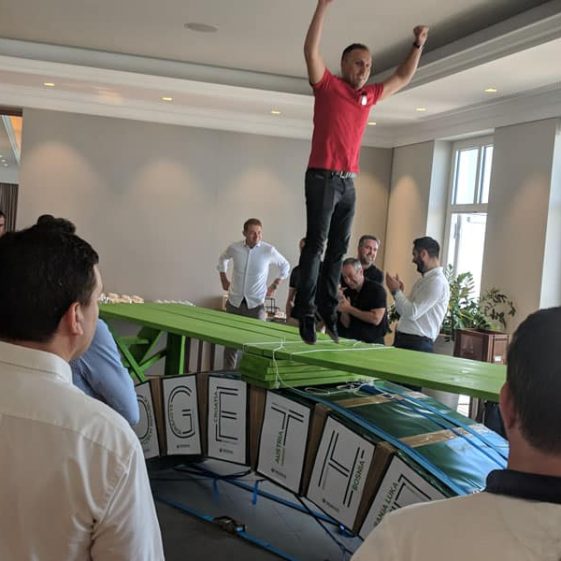
Walkable bridges made of cardbord?
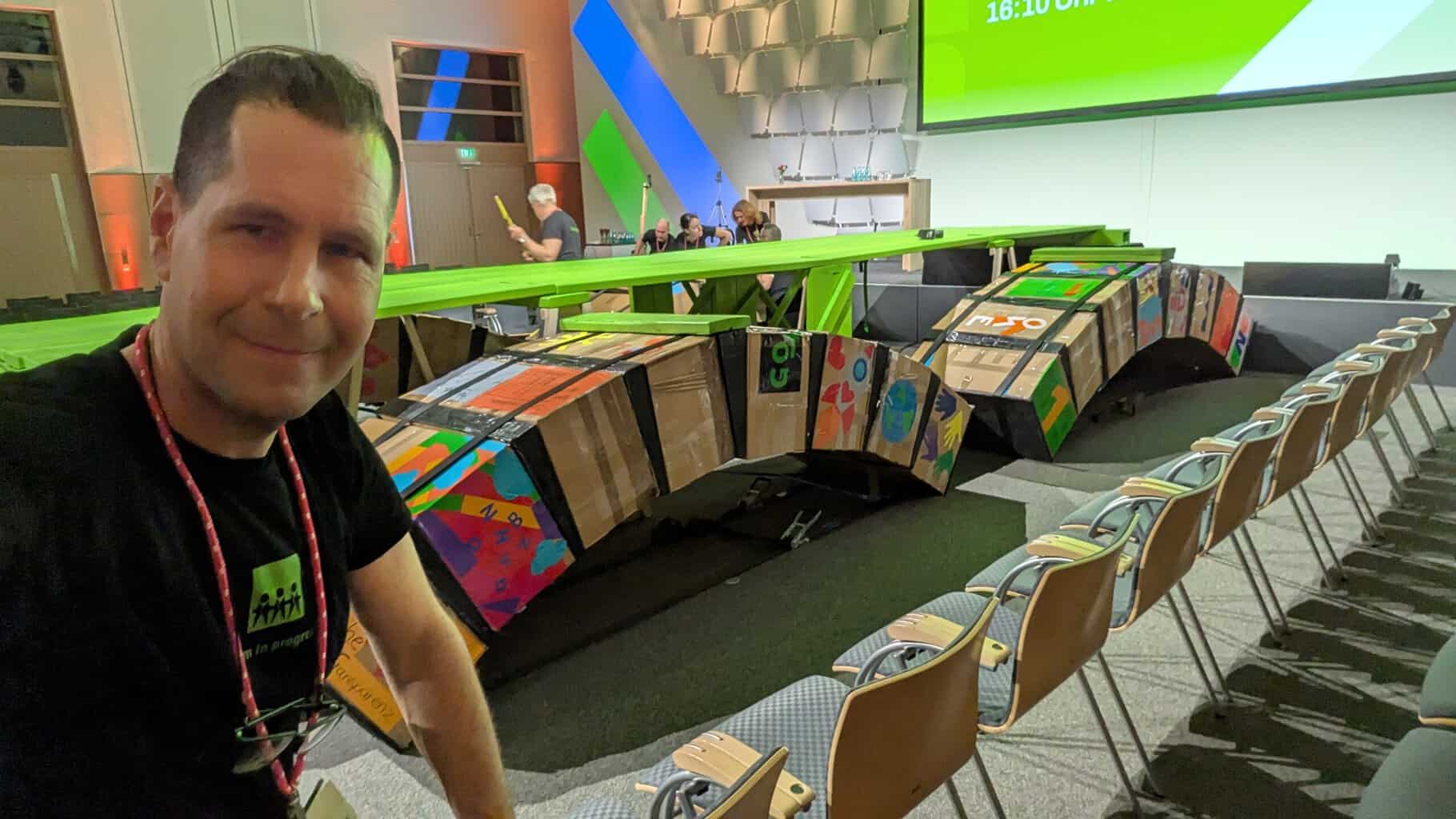
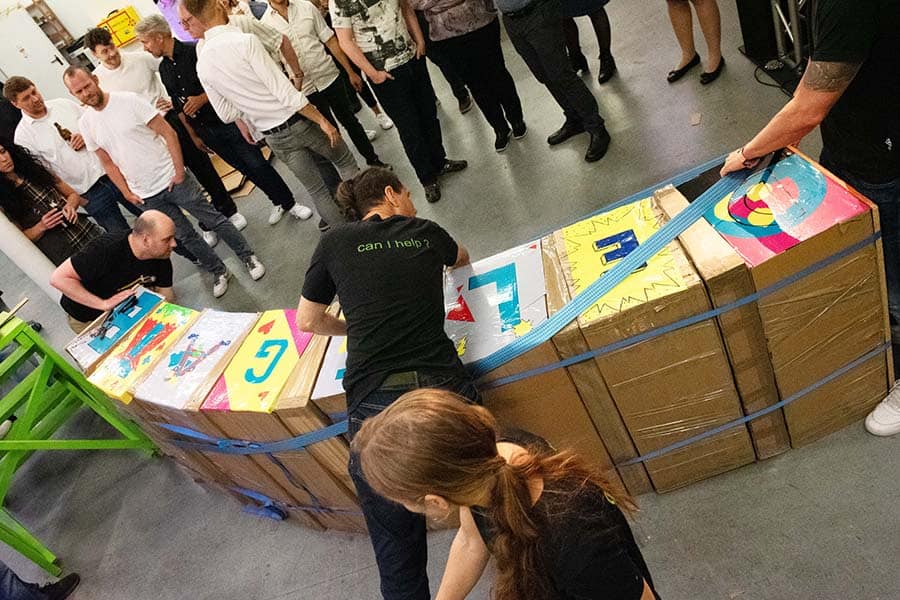
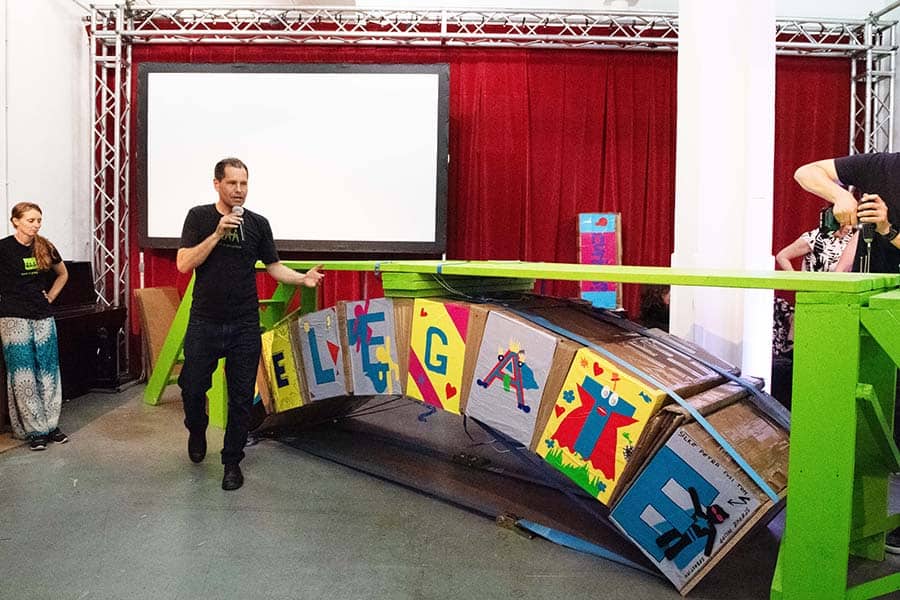
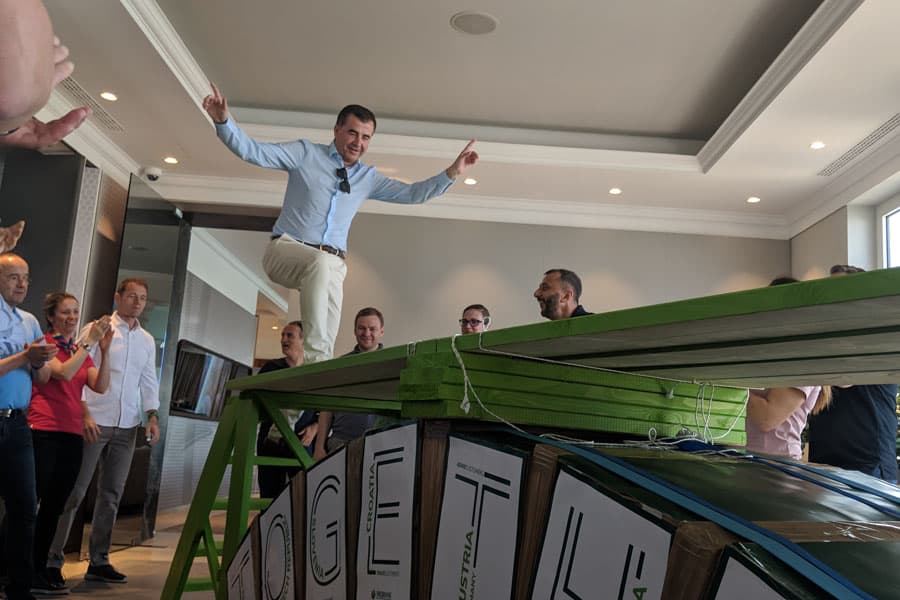
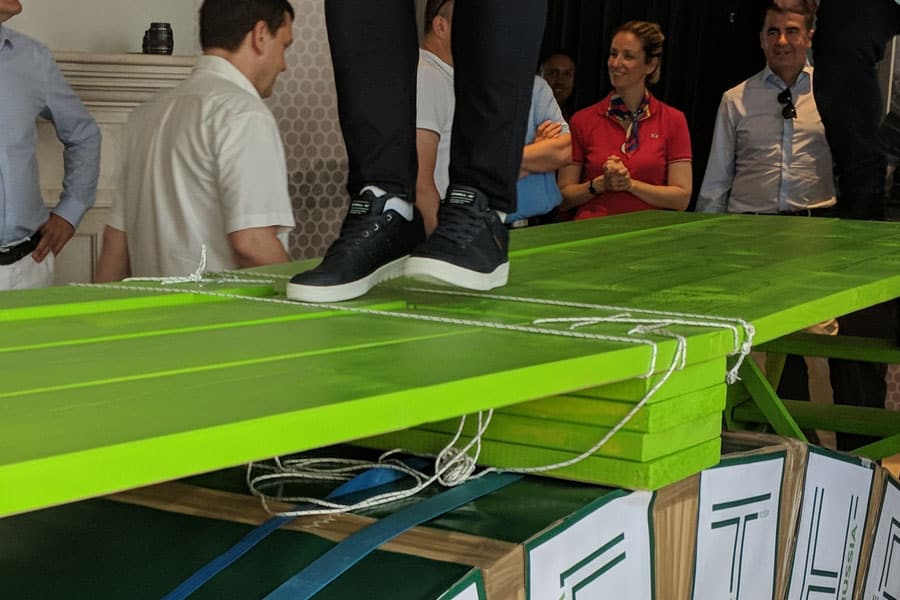
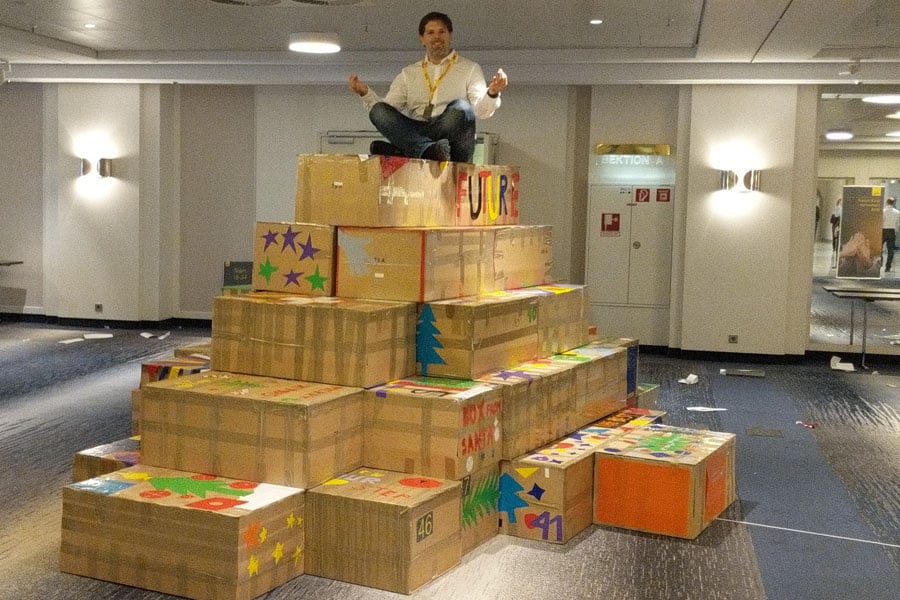
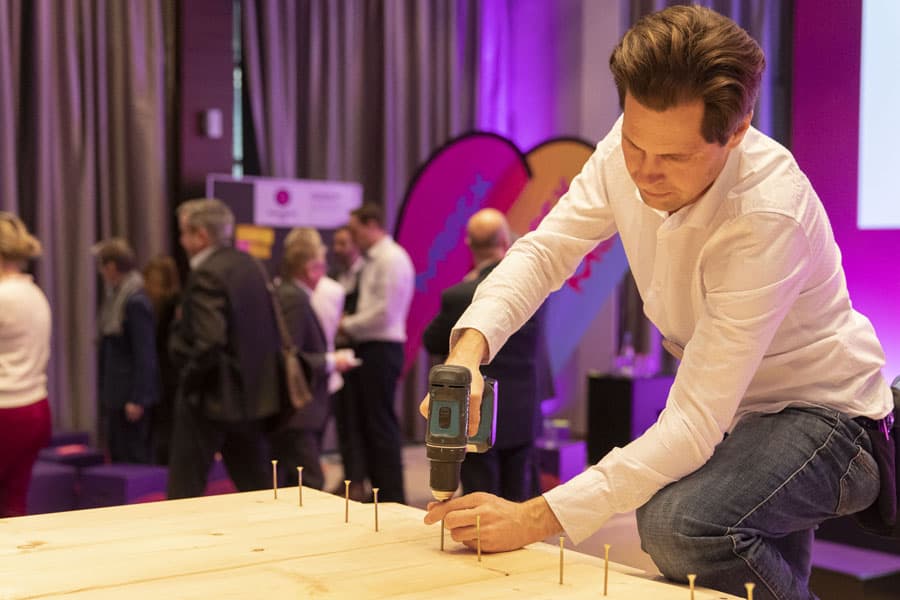
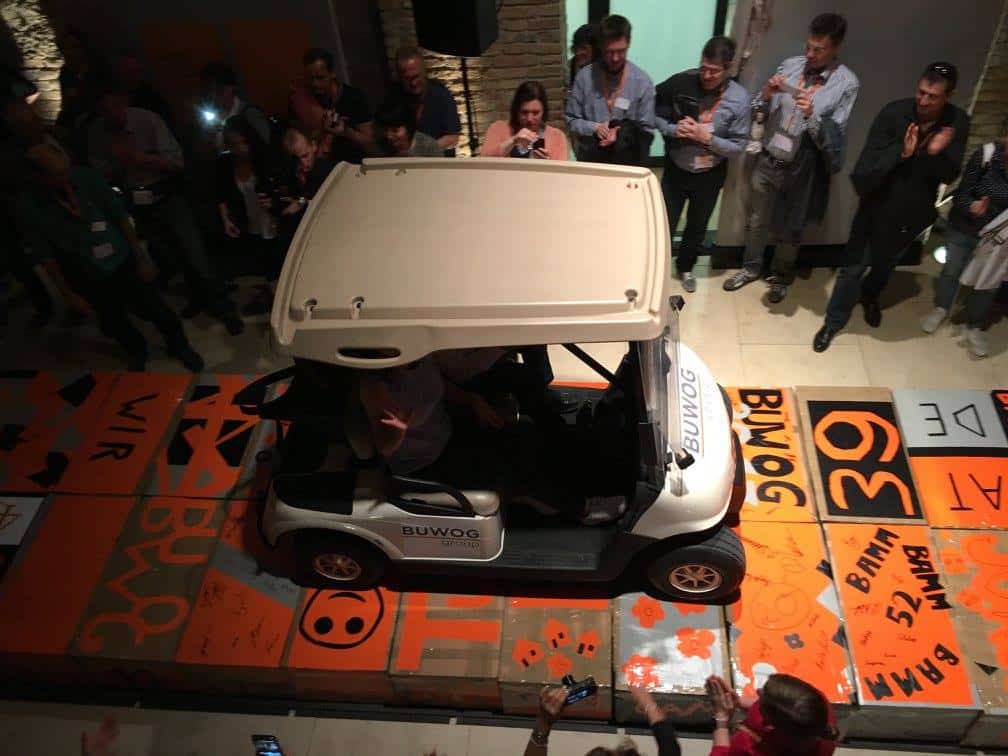
Bridge to the Future is an action-oriented large-group format for conferences, corporate events, and indoor events with many participants. Teams build stable cubes, prisms, and other structural elements from cardboard. The individual modules are then connected into one shared structure – such as a bridge, ramp, stage, or walkable installation.
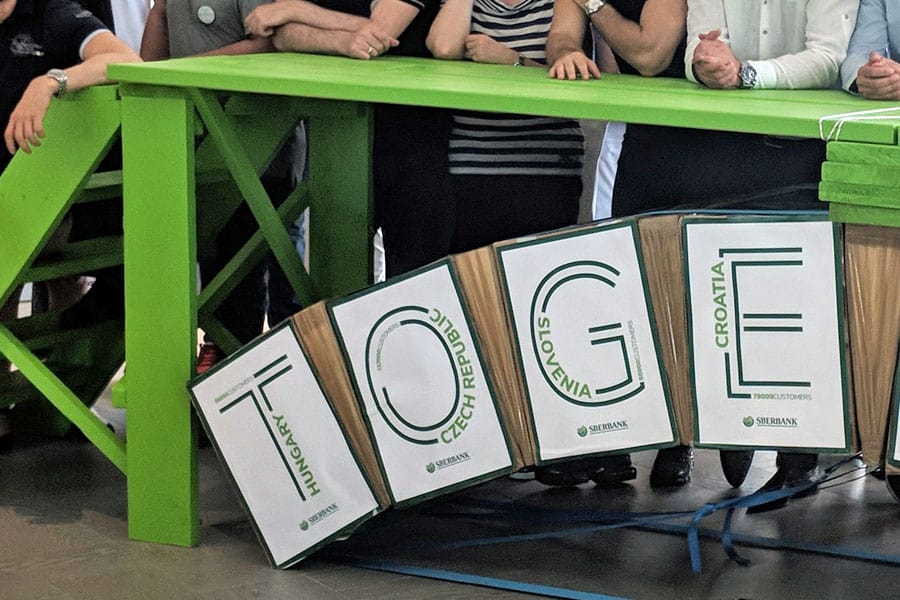
The event combines creativity, construction, and collaboration. The building elements symbolically represent individual skills, team performance, and cooperation within an organization. It becomes especially visible how stability and strength emerge through collaboration. Content, values, or messages can be directly integrated into the constructions and made visible.
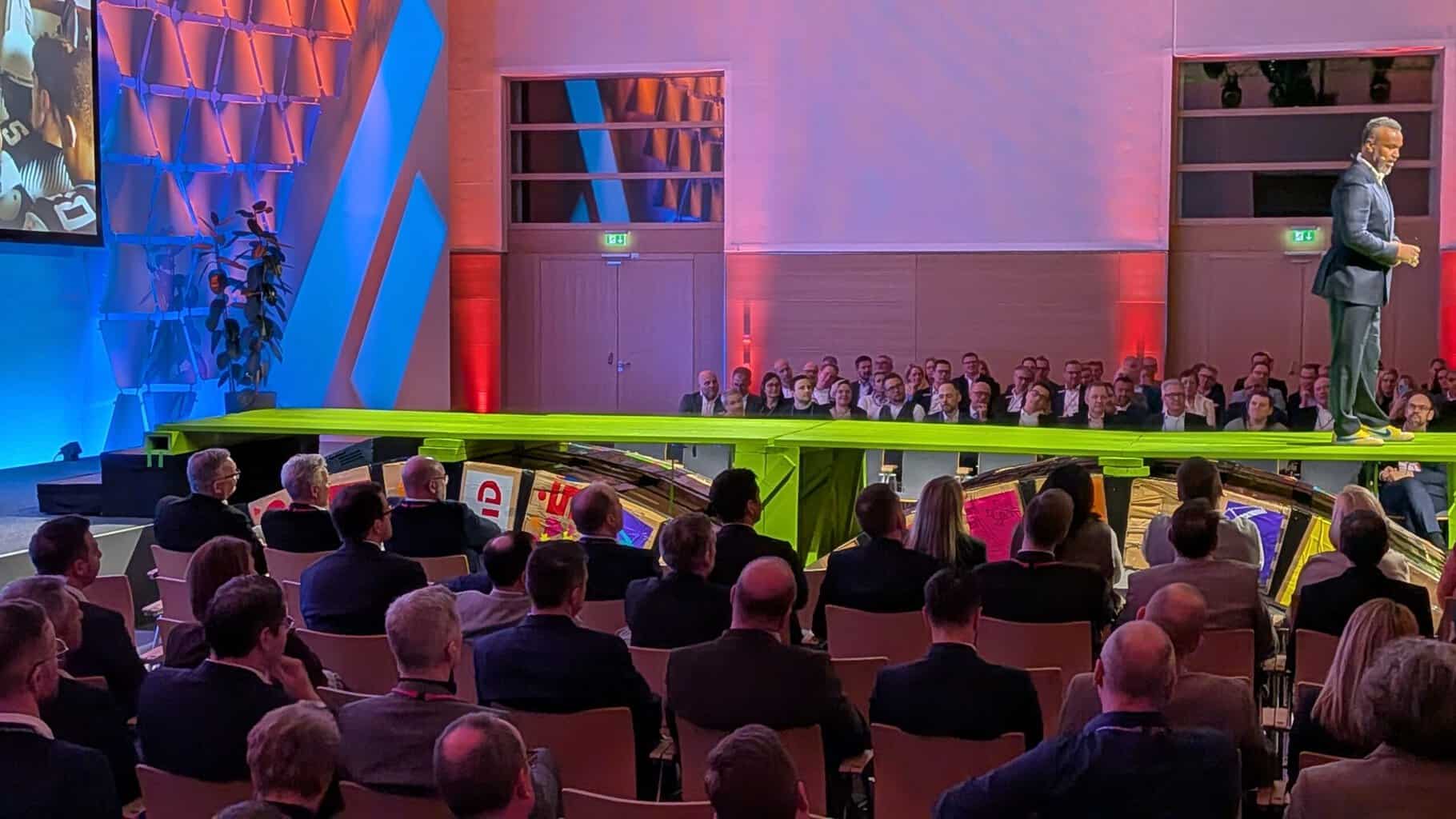
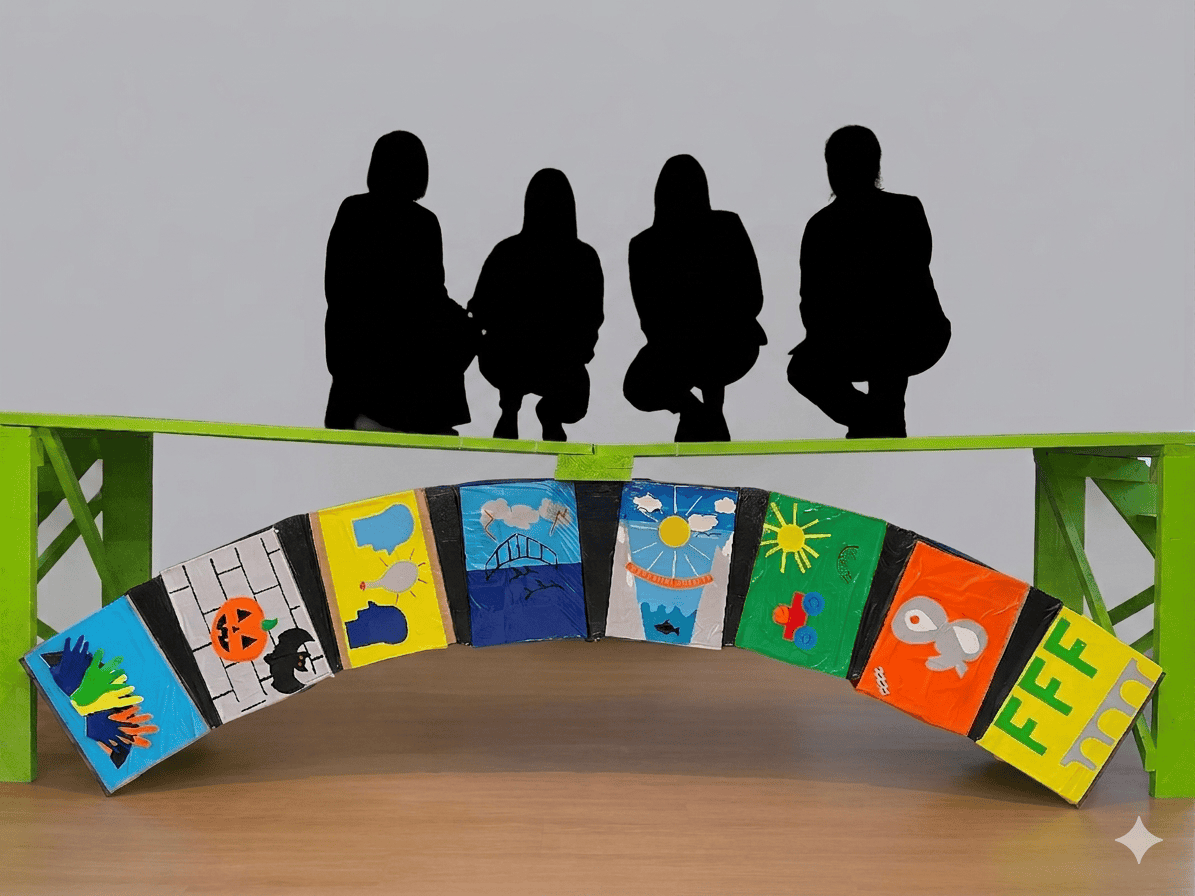
Walkable bridges made of cardbord?
Bridge to the Future is an action-oriented large-group format for conferences, corporate events, and indoor events with many participants. Teams build stable cubes, prisms, and other structural elements from cardboard. The individual modules are then connected into one shared structure – such as a bridge, ramp, stage, or walkable installation.
The event combines creativity, construction, and collaboration. The building elements symbolically represent individual skills, team performance, and cooperation within an organization. It becomes especially visible how stability and strength emerge through collaboration. Content, values, or messages can be directly integrated into the constructions and made visible.
OUR SERVICES
What you get with us
For large groups
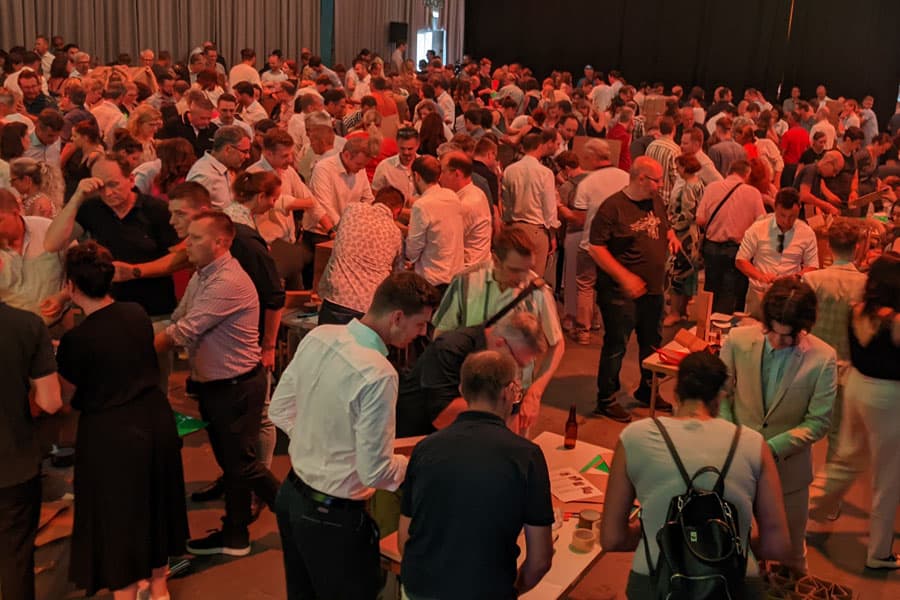
The format easily scales from 100 to more than 1,000 participants.
Strong visual impact
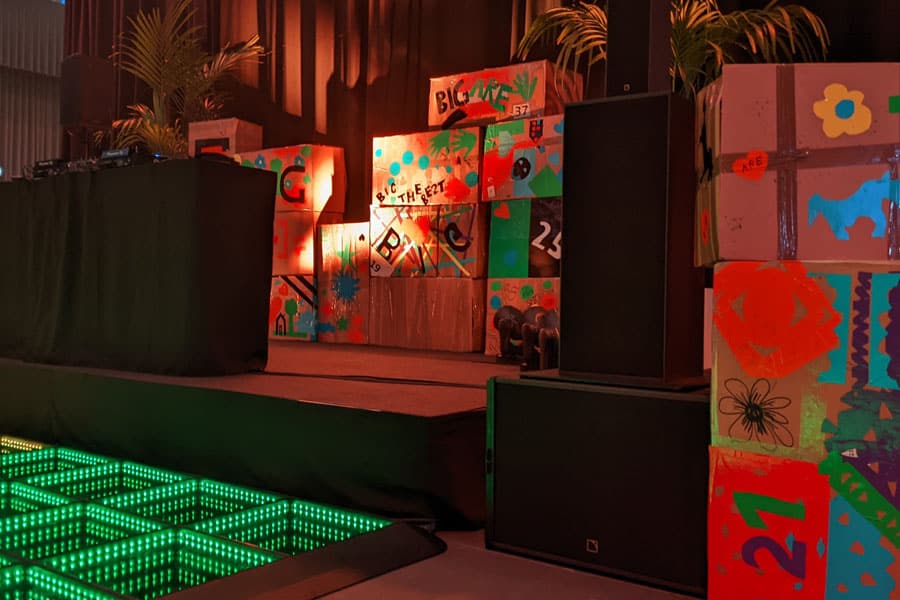
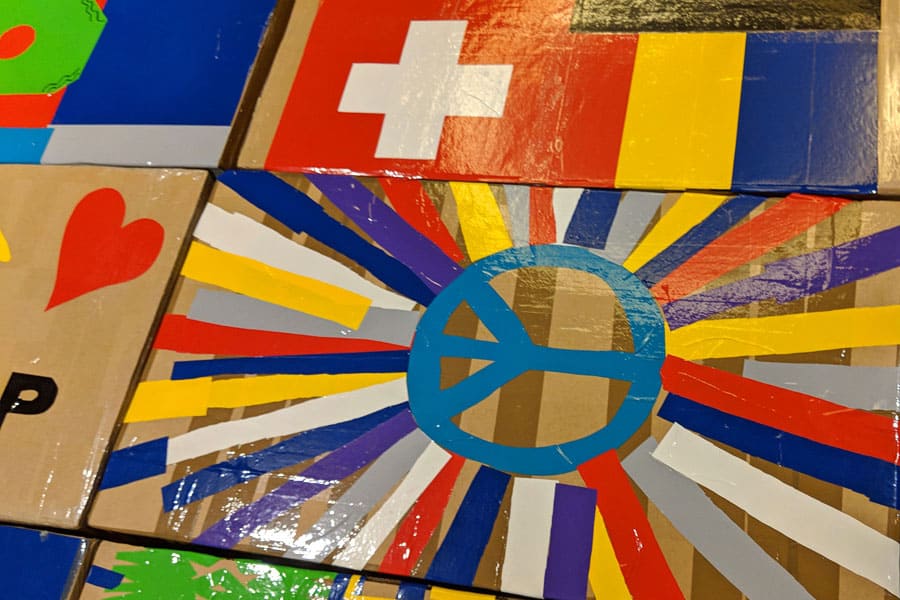
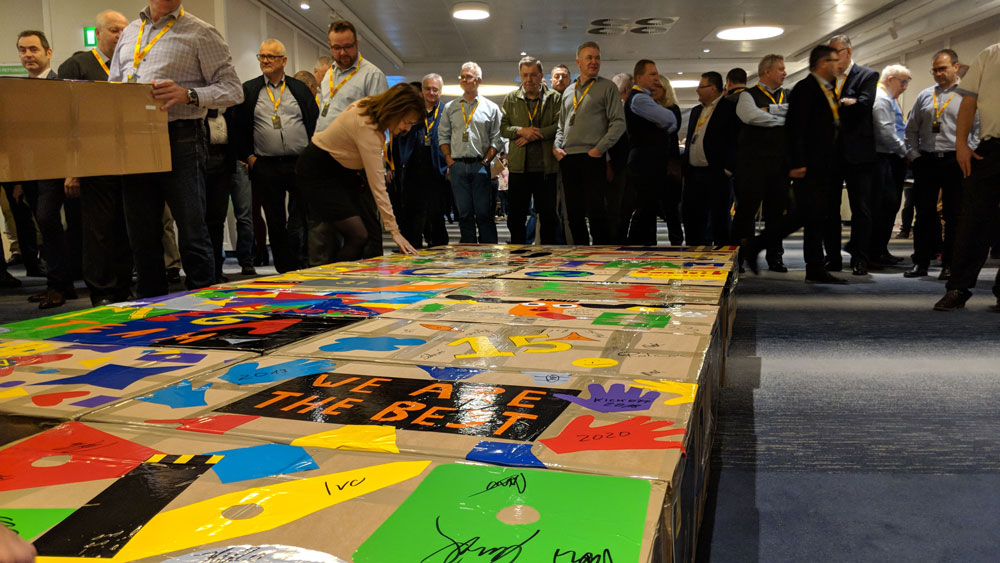
Colors, foil elements, and messages make content visible and create a strong lasting impression.
Ideal as a conference activation
Clear construction principles allow for a quick start and high participant engagement.
Durable constructions
The constructed elements can withstand heavy loads.
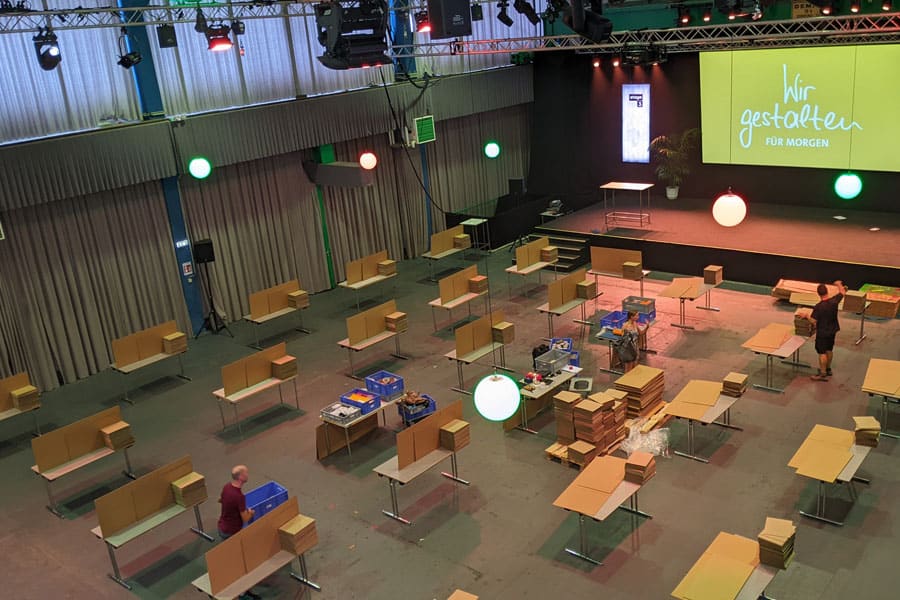
Minimal space requirements
Even large groups can work efficiently in comparatively small spaces.
Visible collaboration
Many individual parts come together to form one shared structure, even in highly diverse groups.
Symbolic power for change
The bridge symbolizes connection, development, future, resilience, and change processes.
Flexible applications
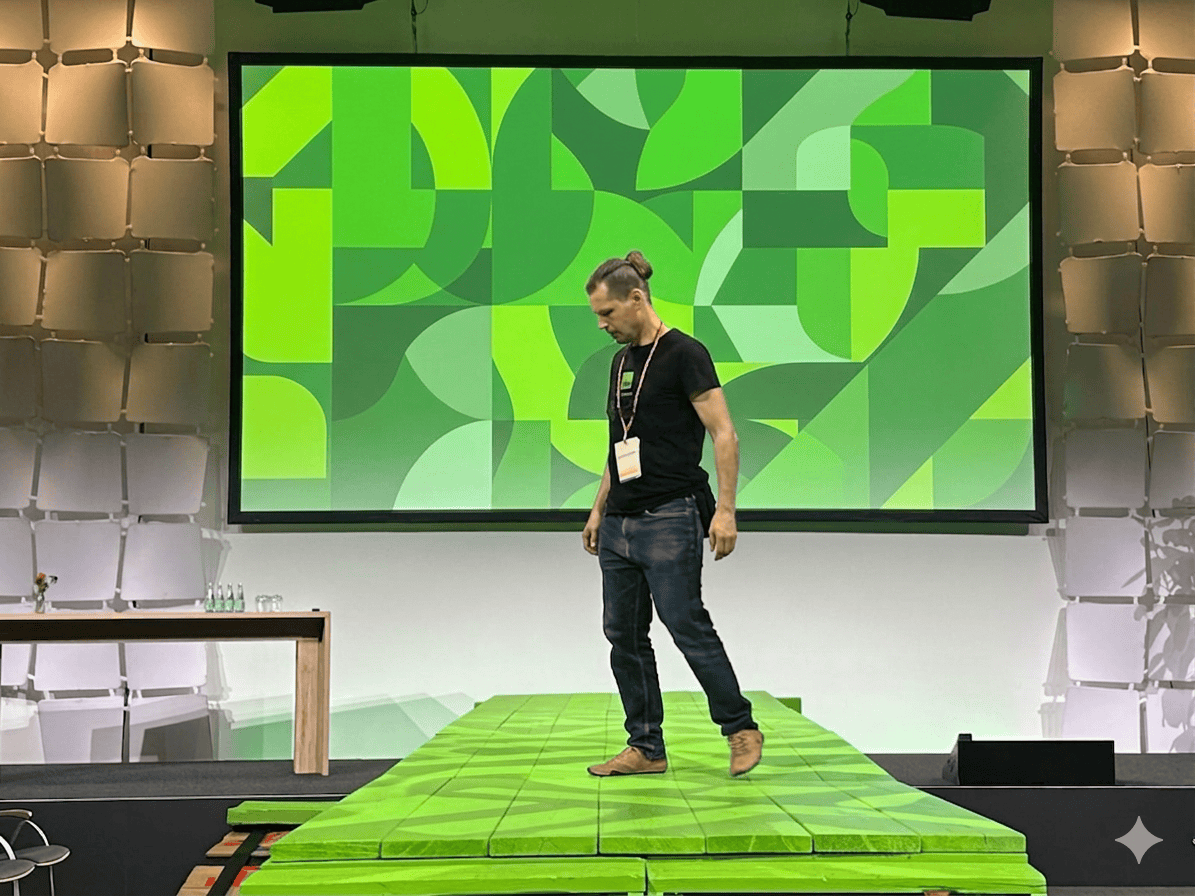
Bridge, stage, runway, or spatial installation – many possibilities are available.
Duration
The duration can be individually adapted from 1.5 to 4 hours.
FAQ
Frequently Asked Questions
Everything you need to know about “Bridge to the Future” as a team event.
Why should I book “Bridge to the Future” for my event?
Bridge to the Future combines active collaboration with strong visual and thematic impact. The format is especially suitable for conferences, conventions, and events with many participants because large groups can be involved simultaneously while still creating one shared result. Step by step, individual building elements become a visible and often even walkable overall structure.
Unlike many traditional team-building formats, this event leaves behind not only a memory but a real collective structure. Collaboration, coordination, and the interaction of many teams become immediately visible. At the same time, the event offers a strong symbolic layer: bridges represent connection, trust, transformation, and moving forward together.
By combining creativity, construction, and shared activity, the format creates an experience that activates people, encourages interaction, and works especially well with diverse groups. Content, values, or event themes can also be directly integrated into the design. This turns the event not only into an experience, but also into a visible part of the conference or event itself.
Is “Bridge to the Future” just a craft workshop?
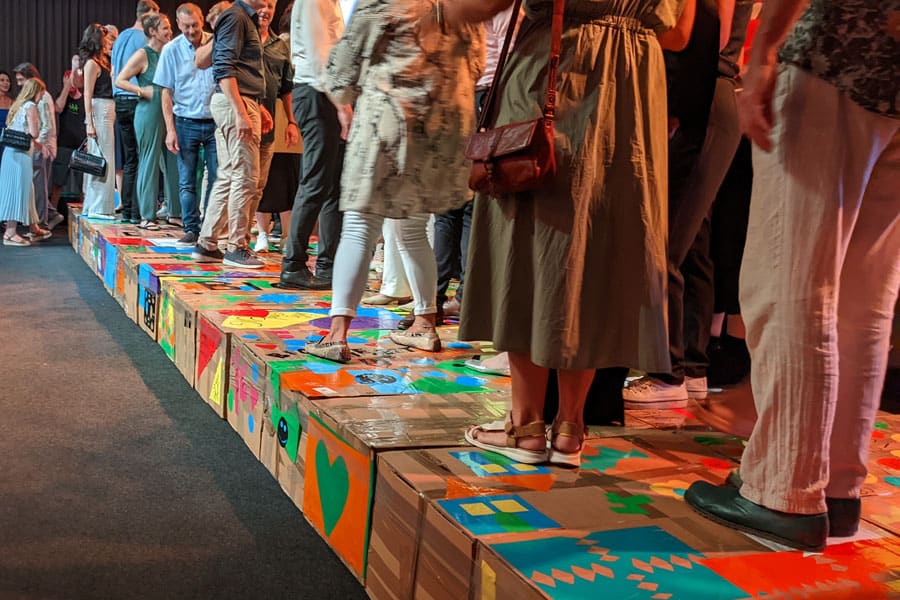
No. Bridge to the Future is not a traditional craft workshop, but a collaborative construction project with a clear objective, high participation, and a visible result. Teams create durable structural elements that are later connected into one large overall construction. The result can be bridges, stages, ramps, or spatial installations that are often even walkable.
The focus is on collaboration, coordination, and the interaction of many teams. The scale of the construction and the shared load test make the difference tangible: this is not crafting — this is a collective structure.
What metaphor is behind “Bridge to the Future”?
The shared construction symbolically represents collaboration within teams and organizations. Individual elements take on different functions and only become truly stable through interaction. The bridge itself stands for connection, trust, transformation, and overcoming obstacles. Weight and responsibility are not carried by individuals alone, but distributed across the entire system.
What makes the special moment of “Bridge to the Future”?
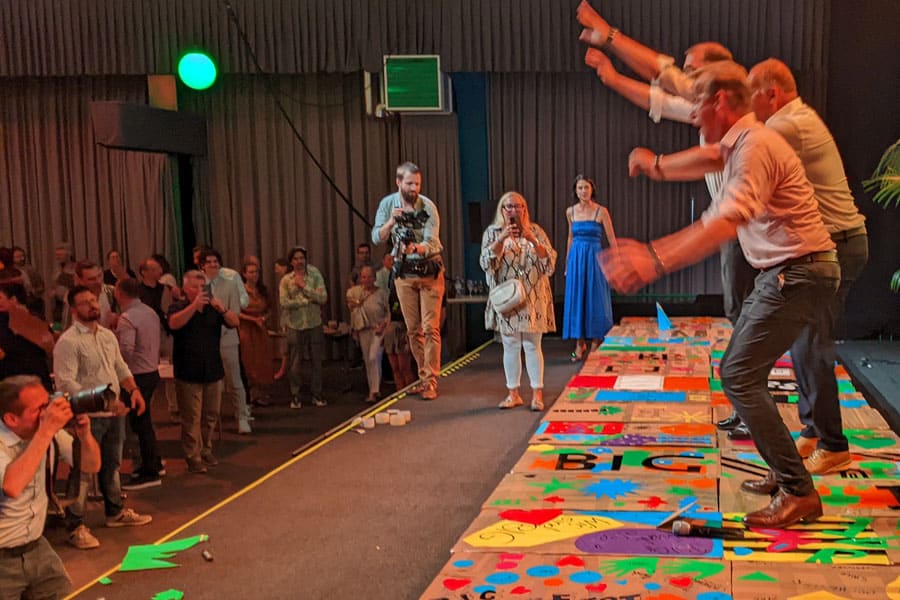
The special moment happens when many separate building elements suddenly become one shared structure. Teams that previously worked independently connect their elements into one large bridge, stage, or spatial installation. This is often followed by a shared load test or the first moment of walking across the construction together.
Especially in large groups, this creates a unique dynamic: hundreds of people directly experience that stability and strength are only possible through collaboration. The moment when participants walk together across their own bridge often remains memorable for a very long time.
Why is “Bridge to the Future” especially suitable for large groups?
The format allows many teams to work simultaneously toward one shared goal. Thanks to the modular construction method, space requirements remain manageable and even very large groups can be organized efficiently. Each team contributes visibly to the final structure. This creates a shared experience with strong participation and clear collaboration, even in very large groups.
Can content and results from smaller groups be integrated?
Yes. Content, messages, or outcomes from the event can be directly integrated into the constructions and made visible. Teams can, for example, design and document values, visions of the future, strategies, key messages, or workshop results directly on the modules.
This turns Bridge to the Future not only into a team event, but also into a visible workspace and presentation surface within the event itself. The finished structure can later be used as a stage, spatial installation, or shared symbol of the conference or convention.
Can “Bridge to the Future” also take place outdoors?
Yes. The event can also take place in covered outdoor areas, courtyards, or suitable open spaces. Dry conditions and an even surface are important. The constructions can be assembled quickly and removed just as easily. However, the cardboard must not get wet.
How long does the event last?
Depending on the group size and desired construction, Bridge to the Future usually lasts between two and four hours.
Can several teams work at the same time?
Yes. The format is specifically designed for many teams to work in parallel and later connect their elements into one shared structure. Everyone contributes to one “greater whole,” which becomes very tangible throughout the experience.
Which materials are used?
The constructions are built using cardboard, adhesive tape, and decorative foil. All required materials are provided.
Can the event be customized to a specific theme?
Yes. Colors, messages, values, or event themes can be directly integrated into the design of the constructions.
What happens to the constructions after the event?
The elements can be used as stage design, decoration, or presentation surfaces and can later be dismantled quickly. In many cases, the modules remain in company spaces for several weeks afterward and are even used as seating furniture.
Is “Bridge to the Future” sustainable?
Yes. The event mainly uses cardboard and simple materials with low resource consumption. Many building elements can be reused or recycled. Thanks to the modular design, the material usage remains relatively low compared to the size of the group and the impact of the event.
Can “Bridge to the Future” be integrated into the event program?
Yes. The flow, dramaturgy, and thematic focus can be coordinated with moderators, keynote speakers, or the event management team. This allows the event to be integrated purposefully into conferences, conventions, or change processes.
Is “Bridge to the Future” suitable for conferences, conventions, and large-group events?
Yes. Bridge to the Future was specifically developed for large groups, conferences, conventions, and indoor events. The format combines team building, conference activation, and collaborative work within one visible overall project. Even with several hundred participants, organization remains manageable because many teams can work simultaneously on separate modules.
As an indoor team event, the format is especially suitable for conferences, corporate events, kick-offs, and large conventions. The shared team challenge activates participants, encourages interaction between departments, and creates a collective experience with strong engagement. At the same time, an impressive structure emerges that can serve as a stage, installation, or visible symbol of the event.
When is “Bridge to the Future” less suitable?
The format is less suitable for very small groups or events with very limited time. It also reaches its limits when there is insufficient movement space, purely outdoor locations, or highly formal event programs. Bridge to the Future unfolds its full impact where collaboration should become visible, active, and collectively experienced.
LOCATIONS
We bring this action-oriented team building experience to your location
Your preferred location
A small insight
Walkable cardboard bridges
Contact us without obligation — we will plan your individual team building event tailored to your conference or meeting and will gladly prepare an offer for you.